

A rooftop DJ set is shaped by more than music. Light, temperature, architecture and the changing rhythm of the city all become part of the experience.
What begins as a relaxed afternoon gathering can gradually transform into an evening filled with movement. The role of the DJ is to understand this transition and allow the music to evolve naturally with the space.
Every Rooftop Has Its Own Rhythm
No two rooftops feel the same.
Some overlook a busy city centre, while others offer a quiet view above the surrounding streets. The height of the building, the design of the venue, the time of day and even the weather can influence how the music is perceived.
Before choosing the direction of a set, I try to understand the character of the space. A rooftop with a refined lounge atmosphere requires a different musical approach from a venue designed for late-night dancing.
The music should feel connected to its surroundings rather than placed on top of them.
The Afternoon Creates Space
During the afternoon, guests are usually arriving, ordering drinks and settling into the venue. Conversations are still the main focus, so the music needs to create an atmosphere without asking for too much attention.
This part of the set is about space and subtle movement.
Warm percussion, soft basslines, organic textures and deeper electronic sounds can introduce rhythm while allowing the environment to remain open and relaxed.
The purpose is not to bring everyone to the dance floor immediately. It is to create a feeling that encourages people to stay, connect and become part of the space.
Sunset Changes the Mood
As the sun begins to fall, the atmosphere changes almost without announcement.
The light becomes warmer, the city starts to glow and people become more aware of the moment around them. Music that felt right during the afternoon may suddenly need more emotion and direction.
Sunset is an opportunity to introduce stronger melodies, expressive vocals and a slightly more defined rhythm.
The transition should remain gradual. Rather than suddenly increasing the tempo, I prefer to build emotional intensity through track selection, harmony and timing.
A carefully chosen track during golden hour can become one of the most memorable moments of the entire evening.
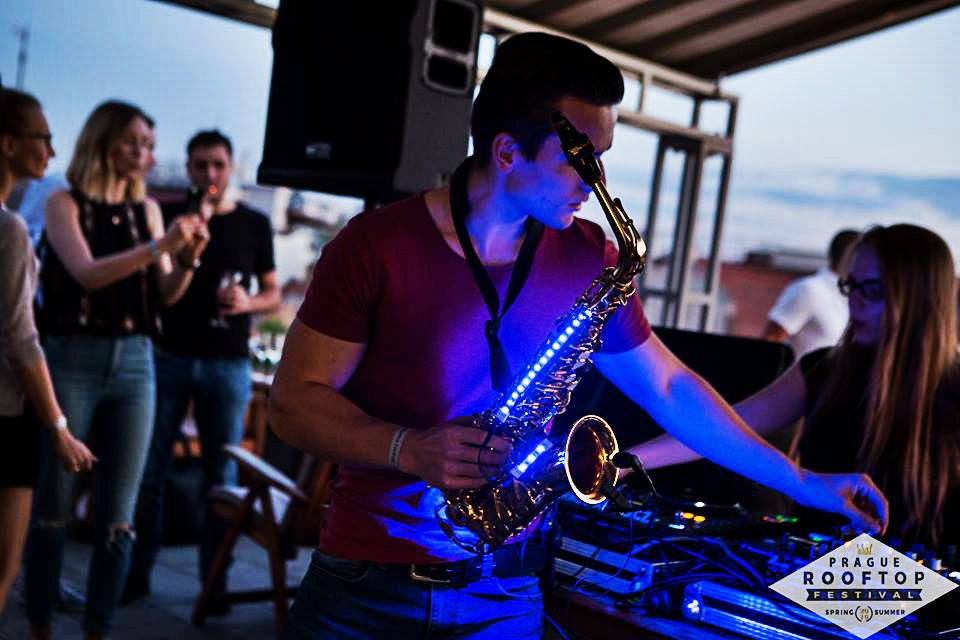
Energy Should Never Be Rushed
One of the most important parts of building a rooftop set is knowing when to move forward and when to wait.
Energy does not always come from playing faster or louder. Sometimes it develops through repetition, tension or a melody that slowly draws people closer to the music.
Moving too quickly can disconnect the set from the natural rhythm of the event. The audience needs time to experience each stage before being guided towards the next one.
For me, progression should feel effortless. Guests may not notice exactly when the music becomes deeper or more energetic, but they should feel that the atmosphere is changing.
Twilight Introduces Movement
After sunset, the visual character of the rooftop begins to transform.
Venue lighting becomes more visible, conversations become shorter and people start responding more directly to the rhythm. The music can now move from supporting the atmosphere to actively shaping it.
Basslines can become deeper, percussion more defined and transitions more dynamic.
This is often where melodic house, afro house and progressive electronic elements begin to take a stronger position within the set. The sound gains momentum while still remaining connected to the warmth of the earlier hours.
The afternoon and evening should never feel like two separate playlists. A consistent emotional thread helps the entire set feel like one continuous story.
After Dark, the City Becomes Part of the Set
Once the skyline is illuminated, the rooftop becomes a different kind of venue.
The music can become more direct, with stronger rhythms, greater tension and more powerful moments. Depending on the event, the sound may move towards melodic techno, deeper house or more energetic afro-influenced tracks.
However, a rooftop is not always a traditional nightclub.
People may be dancing beside guests who are still having dinner or enjoying drinks. The sound must respect the venue, its identity and the expectations of the audience.
The strongest track is not always the right track. The aim is to find the highest level of energy that still feels natural within the space.
Reading an Open-Air Audience
Outdoor events respond to details that do not exist in the same way inside a club.
Wind can affect how sound travels. A change in temperature may influence where people stand. New guests can arrive throughout the evening without having experienced the earlier stages of the set.
This makes observation essential.
Preparation provides a direction, but the audience determines how quickly the journey should develop. I pay attention to movement, conversation and the way people react when the rhythm changes.
Sometimes the crowd is ready for more energy. At other moments, the music needs room to breathe.
Reading these signals allows the set to remain alive rather than predetermined.
A Rooftop Set Is a Journey
A memorable rooftop set is not defined by one track or one dramatic moment.
It is defined by progression.
The afternoon creates comfort. Sunset introduces emotion. Twilight builds anticipation. Night transforms that anticipation into movement.
When these stages connect naturally, the audience experiences the evening as a complete journey rather than a sequence of songs.
For me, building a rooftop DJ set means working with everything that surrounds the music: the skyline, the changing light, the energy of the guests and the identity of the venue.
From the first afternoon track to the final moment after dark, the music grows together with the city.
